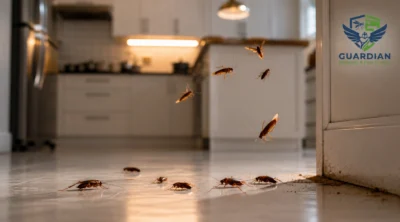
Flying roaches in Texas are a common concern during warm, humid weather. Species such as American, smokybrown, and Asian cockroaches may fly or glide toward lights, buildings, and other sheltered areas. Understanding why they appear and where they come from can help homeowners prevent an infestation before it gets worse.
It is important to understand why these pests appear and how infestations develop in the first place. Let’s break down exactly where flying cockroaches come from, why they show up around homes, and how to stop them before they take over.
What Are Flying Roaches and Which Texas Species Can Fly?
It is a common misconception that all cockroaches fly. While most species have wings, many are flightless, using their wings only for balance or short glides. However, several species of Texas cockroaches are highly capable aviators.
The primary reason you see flying cockroaches in Texas is the climate. Cockroaches are cold-blooded (ectothermic). When temperatures soar above 85°F and humidity levels climb, their metabolic rate spikes. This surge in energy allows them to use muscles they typically keep in reserve. Common species capable of flying or gliding include:
- American cockroaches
- Smokybrown cockroaches
- Asian cockroaches
- Brown-banded cockroaches
Where Do Flying Roaches Come From in Texas?
If you want to eradicate them from your home, you have to know where they are stationed. The reality is that these pests originate from several distinct environmental reservoirs:
- The Canopy and Tree Holes: Smokybrown roaches live in the hollows of oak trees and palm fronds. From these heights, they glide down onto roofs and through attic vents.
- The Sewer System: American cockroaches thrive in the moist, organic-rich environment of city sewers. During heavy rains or extreme heat, they move upward, often entering homes through drains or manhole covers.
- Mulch and Landscaping: Thick layers of pine bark or wood mulch against a home’s foundation create a roach highway. It provides the perfect combination of moisture and decaying organic matter.
- Attics and Crawl Spaces: If your insulation is damp or your attic is poorly ventilated, it becomes a primary breeding ground for a cockroach with wings.
How to Identify Cockroaches with Wings?
To effectively manage an infestation, you need more than just a can of spray. You need to have a clear idea of what’s roaming inside your home. There are a few flying cockroach species found in Texas, which include:
Types of Flying Cockroaches Found in Texas Home:
- American Cockroach: Reddish-brown in color. They can grow up to 2 inches long. These are the most common “palmetto bugs” and are strong fliers.
- Smokybrown Cockroach: Uniformly dark mahogany. They are smaller than the American variety but are even more prone to flying toward porch lights.
- Asian Cockroach: Often confused with the German roach, but unlike their indoor cousins, these live in leaf litter and are attracted to bright lights, frequently flying through open doors.
Signs of a Flying Roach Infestation
Seeing one flying roach might be an accident, but seeing the following signs means you have a colony:
- Oothecae (Egg Casings): Small, dark brown, purse-shaped capsules found in cabinets or behind appliances.
- Droppings: Small specks that look like black pepper or coffee grounds, usually clustered in smear marks near water sources.
- The Musty Odor: Cockroaches communicate via pheromones. An established infestation has a distinct, oily, pungent smell that lingers in the air.
How to Get Rid of Flying Roaches Effectively?
If you want to know how to get rid of flying roaches, you must stop thinking about individual bugs and start thinking about the environment.
Step 1: Harden the Perimeter
Your home should be a fortress. Texas cockroaches look for the path of least resistance.
- Seal the Vents: Use fine mesh screening over attic vents and weep holes. This is the number one way flying species enter from trees.
- Caulk and Weatherstrip: If you can see daylight under your door, a roach can walk (or fly) right in. Replace worn door sweeps immediately.
- Light Management: Flying roaches are attracted to UV light. Switch your outdoor bulbs to yellow bug lights or motion-activated LEDs to stop drawing them toward your entrances.
Step 2: Eliminate Moisture
A roach can live for a month without food but only a week without water.
- Fix the Drips: Even a tiny leak under the kitchen sink provides enough hydration for an entire colony.
- Dry the Sinks: At night, wipe your sinks dry and plug the drains. This cuts off their easiest access point.
- Dehumidify: Use a dehumidifier in basements or crawl spaces to keep the air below 50% humidity, which is lethal to many roach species over time.
Step 3: Strategic Baiting
Sprays often just scatter the problem. Baits are the only way to reach the nest.
Gel Baits: Apply small, pea-sized drops of professional-grade gel bait (containing fipronil or indoxacarb) in areas where you’ve seen activity. The roaches eat the bait, return to the nest, and die. Because roaches are cannibalistic, the poison spreads through the colony.
Boric Acid: Dust a very thin layer behind appliances and in wall voids. It acts as a desiccant, shredding their exoskeleton and dehydrating them.
When Should You Call Professional Pest Control?
Texas is a massive state with a climate that favors pests 365 days a year. While DIY methods can handle a stray traveler, a full-blown flying roach infestation in the walls or attic requires specialized equipment.
Professional services, such as those provided by Guardian Mosquito and Pest Control, use Integrated Pest Management (IPM). This involves more than just chemicals. It includes high-reach dusting of attics with insect growth regulators (IGRs) that prevent young roaches from ever reaching the flying adult stage. If you find yourself panic-spraying every night, you are wasting money on temporary fixes for a structural problem.
Wrapping Up
Seeing a flying roach inside your Texas home can be unsettling, but early action can help prevent a larger infestation. Check for moisture, entry points, outdoor attractants, and signs of ongoing activity. If flying roaches continue to appear, professional pest control can identify the source and recommend targeted treatment.
For homeowners dealing with flying roaches in Montgomery, TX, Guardian Mosquito and Pest Control can inspect your property and help develop an appropriate pest management plan.
If you are dealing with flying roaches around your home, professional pest control in Montgomery, TX can help identify where the roaches are entering and what conditions are attracting them. An inspection can help determine whether the activity is coming from landscaping, moisture, attic spaces, crawl spaces, or other areas around the property.
FAQ
Are flying cockroaches common in Texas?
Yes, they are an extremely common sight in Texas. Species like the American and Smokybrown cockroaches are widespread across the state due to favorable weather conditions.
Are flying cockroaches harmful?
Indirectly, yes. While they don’t directly hunt humans, they carry various pathogens, including E. coli and Salmonella, which they pick up from sewers and decaying matter. When they fly into your home, they can contaminate food surfaces. Additionally, their droppings and shed skin are major triggers for asthma and indoor allergies.
What to do if you see a flying cockroach?
Don’t panic and remove it immediately using a spray, trap, or vacuum. Then check your home for possible entry points, food crumbs, or moisture that may be attracting pests. Clean the area, seal gaps around doors and windows, and monitor for more activity. If sightings continue, it’s best to call a professional pest control service to inspect and eliminate the source.
Does Texas have a roach problem?
Historically, yes. Due to the state’s subtropical climate and mild winters, roaches thrive year-round. Major urban areas in Texas consistently rank among the highest in the nation for roach sightings.
Do Texas roaches bite?
Rarely. While they technically have the mandibles to bite, they are scavengers, not predators. A bite might only occur in a severe infestation where food sources are extremely scarce, and even then, it is usually an accidental nibble on dead skin or eyelashes while a person is sleeping. It is not venomous but should be cleaned thoroughly to prevent infection.