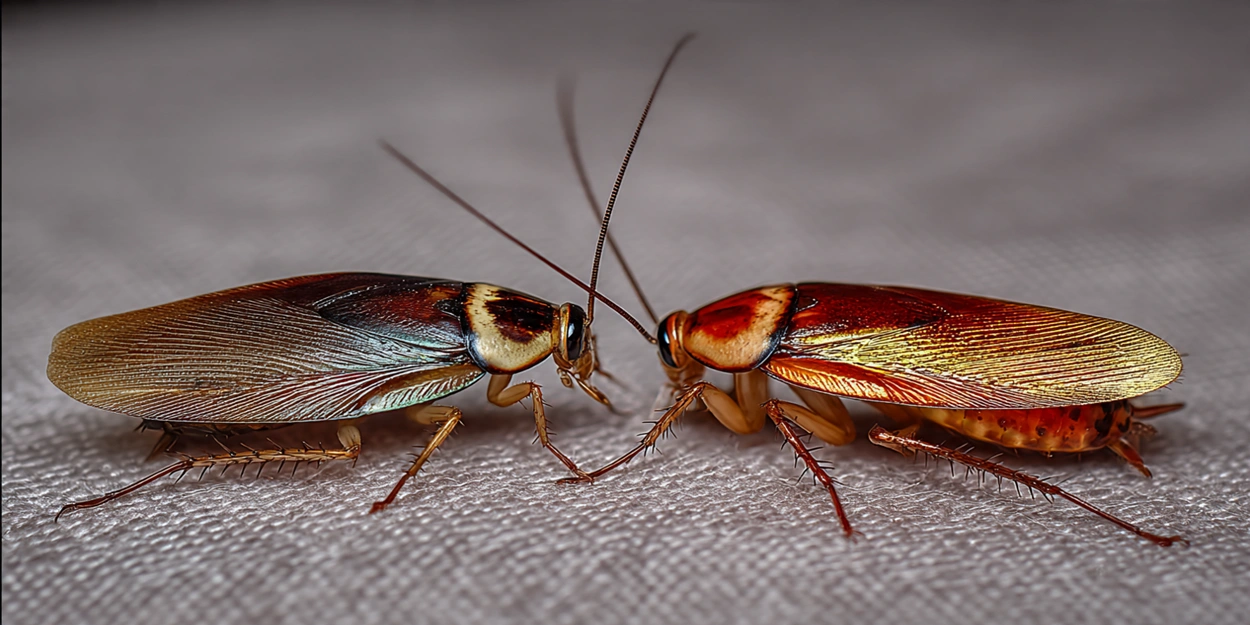
If you’ve spotted a flying cockroach in Texas, you’re not imagining things. Some roaches in Texas really can fly. These roaches with wings are fast, stubborn, and thrive in the state’s warm, humid climate. But why are flying roaches so common here, and what can you do about them?
In this guide, we’ll uncover why roaches fly, what makes Texas the perfect breeding ground for them, and the most effective ways to get rid of flying cockroaches before they take over your home.
Flying roaches are common in Texas because the state’s warm, humid climate provides ideal conditions for several winged cockroach species. Smokybrown cockroaches are capable fliers, while other large cockroaches may glide or fly short distances. Activity often increases during warm, humid weather, especially around outdoor lights, trees, mulch, attics, and other sheltered areas.
Do All Roaches Fly?
Most cockroaches are ground-runners. But a handful of species that thrive in warm, humid climates have fully developed wings and will fly when conditions favor it. In Texas, the one you’ll see flying most often is the smokybrown cockroach. These are large, mahogany-colored roaches that have wings and are capable of truly flying.
Other large species found in the southern U.S. can glide or flap their wings to move short distances. So, when someone asks, “Do roaches fly?” the correct answer is: some do, and Texas is home to the species that actually can.
Common Flying Roaches in Texas
| Cockroach | Can It Fly? | Common Areas |
|---|---|---|
| Smokybrown Cockroach | Yes, strong flier | Trees, roofs, attics, gutters |
| American Cockroach | Can glide/fly short distances | Sewers, drains, basements, outdoors |
| Australian Cockroach | Yes | Warm, humid outdoor areas |
| German Cockroach | Has wings but rarely flies | Kitchens, bathrooms, indoor areas |
Why Are Flying Roaches So Common in Texas?
Texas heat and humidity accelerate insect metabolism and reproduction, resulting in more eggs, faster development, and a higher number of adults. Many flying-roach species prefer the warm, moist edges of buildings. This includes yards with mulch, trees, leaf litter, and poorly ventilated attics. Urban areas with outdoor lights and abundant food sources (garbage, pet food, compost) are especially attractive to cockroaches
To put it simply, the weather, landscaping choices, and messy food storage provide a great place for them. Plus, considering the mild winters in the state, flying roaches in Texas show up in higher numbers, and they seem seasonal but can persist year-round in sheltered pockets.
Why are Flying Roaches Often Seen Indoors Around Lights?
Flying cockroaches may end up around porch lights, windows, and illuminated doorways at night, especially during warm and humid weather. Outdoor roaches can then accidentally enter when doors or windows are opened or through nearby gaps.
The flight behavior of cockroaches is triggered by temperature, humidity, mating season, and disturbance. Warm, still nights, often in late spring and summer, are prime times. Light can attract or disorient insects, and while many roaches avoid light, outdoor lighting and indoor lamps can change their movement patterns. They end up near windows, porch lights, and doorways, and sometimes flap into rooms.
Are Winged Cockroaches Dangerous to Humans?
Cockroaches are a serious health and hygiene issue. Cockroaches are a serious health and hygiene concern. They can carry bacteria and other contaminants on their bodies and contaminate food or surfaces, while their droppings and shed body parts can also contribute to allergies and asthma, can contaminate food, and their shed skins and droppings aggravate allergies and asthma.
Flying roaches don’t necessarily spread more disease than crawling ones, but flight makes them more mobile, increasing the chance they land on food, counters, or utensils. In other words, they’re not deadly, but they’re disgusting and unhygienic, and you need them lurking around your house.
How to Prevent Cockroach Infestations in Texas?
You probably want this solved as soon as possible. So, here’s a checklist that actually works:
Eliminate Food Sources
Don’t leave any dirty dishes, pet food, or trash exposed. Use airtight containers for storing food and pet kibble. Remember to take the trash out frequently and use a bin with a tight lid.
Remove Moisture
Fix leaks, run bathroom fans, dehumidify basements, and ensure crawlspaces are ventilated. Roaches die slowly from dehydration, so take all the water away.
Seal Entry Points
You need to caulk gaps around doors, windows, plumbing penetrations, and foundation cracks. Replace any torn door sweeps because cockroaches can crawl through even from tiniest of gaps.
Tidy up Outdoor Attractors
Clear leaf litter, stack firewood away from the house, keep mulch away from the foundation, and move garbage and compost bins away from doors.
Light Management
This is the most important step. Reduce night lighting near doors and windows, or switch to lights that attract fewer insects. Shield exterior lights so beams don’t illuminate your doorway.
Use Traps Strategically
Another method you can use is to place glue traps at different spots around the house. These traps will show you activity hotspots. Try placing them near baseboards and under sinks. They don’t eliminate infestations, but give you knowledge on where to put all your efforts.
Don’t Rely on Sprays Alone
Over-the-counter sprays are short-term solutions only. Baits, exclusion, sanitation, moisture control, and an integrated pest management (IPM) approach generally provide better long-term control than relying on contact sprays alone.
Call Professional Help
Flying roaches signal established populations outdoors or in voids. A professional will use species-specific baits, dusts for voids, and perimeter treatments to actually break the cycle. DIY-only approaches delay the inevitable.

Does One Flying Roach Mean You Have an Infestation?
Seeing one flying roach does not always mean your home is infested. Large outdoor species can accidentally enter Texas homes through open doors, windows, vents, or gaps, particularly during warm weather.
However, repeated sightings, roaches of different sizes, droppings, egg cases, or activity in kitchens and bathrooms can indicate a larger problem. If you regularly see cockroaches indoors, especially during the daytime, an inspection can help determine where they are coming from.
Effective Treatment Plan for Roaches That Actually Works
If you spot a flying roach tonight:
- Kill it or trap it in a jar or cardboard box, and then inspect nearby rooms for more.
- Put out several glue traps to map activity.
- Clean counters, secure food, and empty indoor bins.
- Begin sealing obvious entries.
Within one week:
- Deep clean kitchen, pantry, and areas under appliances.
- Reduce humidity and repair plumbing.
- Place baits in cabinets and behind appliances. Sprays only scatter the problem and kill
- only the cockroaches that are visible on the surface.
If activity continues despite consistent sanitation, exclusion, traps, and appropriate baiting, consider contacting a licensed pest control professional. Hire a licensed pest control company. Experienced techs will diagnose species (because treatment differs by species), treat exterior harborage, apply targeted baits inside, and advise on habitat fixes.
When to Call a Professional for Pest Control in Texas
Call a licensed pest control company when:
- You see winged adults repeatedly.
- Baits and traps aren’t showing useful.
- You have recurrent sightings despite cleaning and exclusion.
A professional inspection will identify species, locate harborages (attics, wall voids), and set an evidence-backed treatment plan like perimeter barriers, indoor baiting, dusts in voids, and a follow-up schedule.
You can expect follow-ups, as roach control does take time. If you want local help, Guardian Mosquito & Pest Control offers targeted roach control services across the state. Check out their platform to see the services being offered.
Final Words
Dealing with flying cockroaches in Texas is all about staying one step ahead. These roaches with wings thrive in moisture, warmth, and clutter, making Texas homes an easy target. If you’re seeing flying roaches repeatedly, there may be additional activity nearby or conditions around the property that are attracting them.
So, take the steps mentioned above and take professional help if things get out of hand. Guardian Mosquito & Pest Control offers expert treatment plans to eliminate all sorts of pests for good. Because sharing your home with pests is never an option.
Frequently Asked Questions About Flying Roaches in Texas
1. What kind of roaches fly in Texas?
Several cockroach species found in Texas have wings. Smokybrown cockroaches are particularly capable fliers, while American cockroaches can use their wings to glide or fly short distances under certain conditions.
2. Why do flying roaches come into houses in Texas?
Flying roaches may enter homes looking for moisture, food, shelter, or suitable temperatures, or simply enter accidentally through doors, windows, vents, and structural gaps. Outdoor lighting can also influence insect activity around entry points.
3. Does one flying cockroach mean an infestation?
Not necessarily. One large outdoor cockroach may have accidentally entered the house. However, repeated sightings, droppings, egg cases, young roaches, or daytime activity can indicate a larger cockroach problem.
4. What attracts flying roaches at night?
Warm and humid conditions, food sources, moisture, shelter, and areas around outdoor lighting, doors, windows, trees, and landscaping can contribute to cockroach activity at night.
5. How do I permanently get rid of flying roaches in Texas?
Long-term control usually requires a combination of sanitation, moisture reduction, sealing entry points, reducing outdoor harborage, monitoring, and appropriate cockroach baits or professional treatment. Simply killing the flying roaches you see may not address the source of the activity.