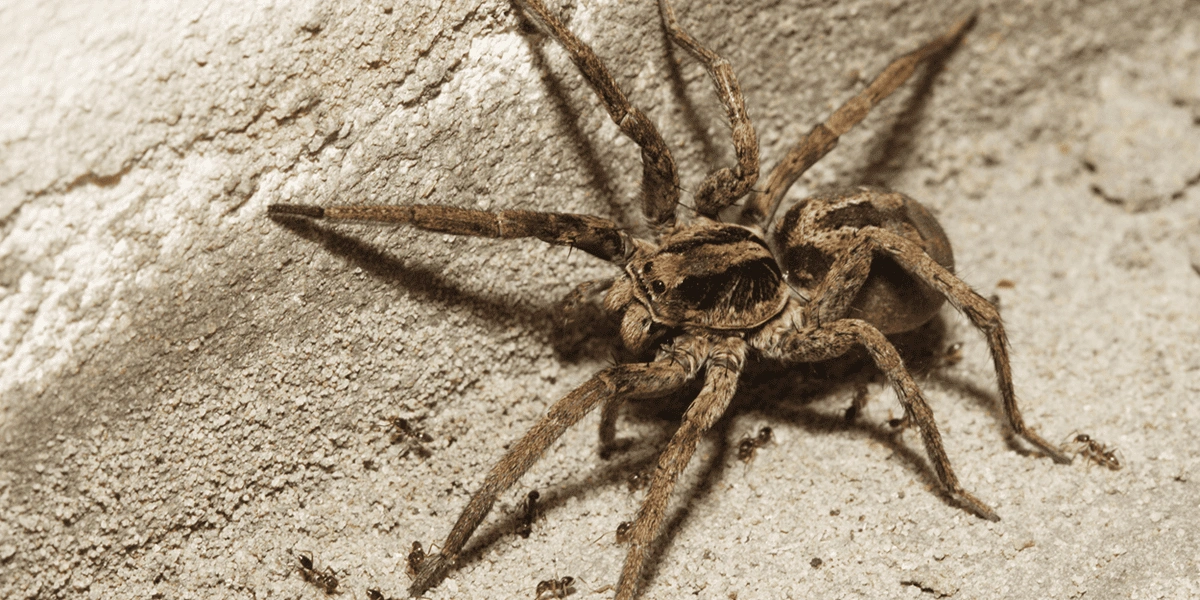
Seeing a wolf spider dash across your floor is a dreadful jump-scare moment. These fast, hairy spiders might not spin messy webs, but they’re not harmless house guests either. They’re stealthy hunters that show up when your home offers food, moisture, and hiding places. If you’ve spotted one, there’s likely more.
So, how to Get Rid of Wolf Spiders and make sure they don’t come back? Here’s what works, based on expert pest control strategies.
Cause of Wolf Spider Infestation
Wolf spiders are usually outdoors, and they lurk under rocks or wood piles, or mulch. But once temperatures drop or their food source moves inside, they’ll follow. They sneak in through:
- Cracks in foundations
- Gaps under doors and windows
- Vents and utility openings
They prefer dark, quiet spaces like basements, garages, and storage areas.
Steps to Get Rid of Wolf Spiders Quickly
Find Their Hiding Spot
Use a flashlight to inspect baseboards, cluttered corners, closets, and utility rooms. Look for live spiders, shed skins, or egg sacs. They don’t spin webs to catch food, so you won’t find obvious signs.
Cut Off Their Food Supply
Wolf spiders eat small bugs like roaches, ants, and silverfish. If those pests are present, the spiders will stay. Set sticky traps, use insect growth regulators, and vacuum regularly to eliminate insect activity.
Use Targeted Insecticides
Contact sprays do little. Instead, apply:
- Residual insecticides along the baseboard.
- Pyrethroid dust in wall voids and outlets.
- Perimeter sprays outside doors and windows.
Always follow label instructions or call a licensed pest control pro.
Seal Every Entry Point
A gap the size of a pen is enough for a wolf spider to slip through. Seal cracks in concrete, gaps around utility pipes, and install door sweeps. Check at night: if light comes through, so can spiders.
Fix Outdoor Conditions
Wolf spiders migrate from outside. Clear leaf piles, store firewood away from the house, and trim back bushes. In Texas, watch for the Carolina Wolf Spider, which is the largest of its kind. These spiders often burrow in soft soil near buildings.
Wolf Spider vs. Brown Recluse: How to Identify?
Many people confuse wolf spiders with brown recluses, and that’s a problem.
Wolf spiders are not deadly. Their bites may cause swelling, but they don’t necrotize.
Brown recluse spiders, however, are venomous, and they may cause severe skin injuries.
Key differences:
- Wolf Spiders: large, hairy, fast, visible eyes.
- Brown Recluses: small, violin-shaped mark, reclusive.
If you’re unsure, treat it as serious and don’t attempt DIY control. Misidentification can delay proper treatment.
Final Words
If you want to truly get rid of wolf spiders and keep them out, you need to make some changes in your home, which means eliminating their food, blocking their entry, and keeping your home free of other pests and bugs.
If all of that sounds like too much to handle alone, you don’t have to. Bed Bug Texas offers expert pest control for wolf spiders using proven treatments, real inspections, and the kind of strategy that actually solves the problem and not just sprays over it.