


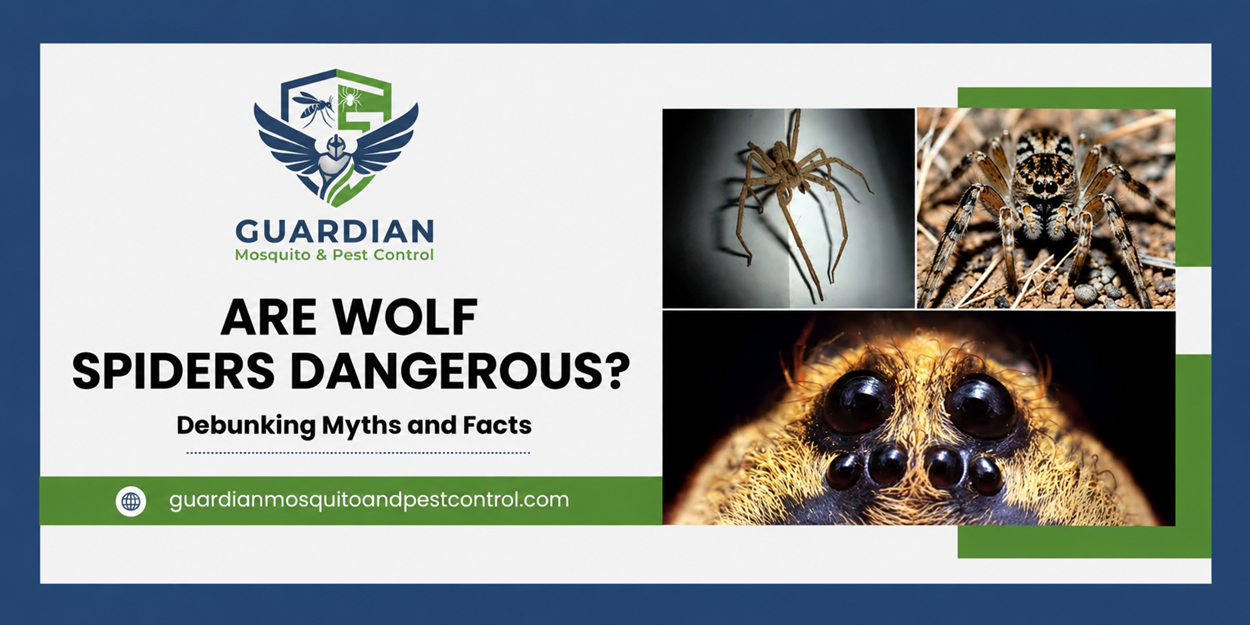
Wolf spiders are often misunderstood creatures. With their large size, hairy bodies, and quick movements, these spiders can appear intimidating. This has led to a flurry of myths about their danger to humans.
So, are wolf spiders dangerous? Let’s separate fact from fiction while addressing common concerns about wolf spiders and their bites.
Do Wolf Spiders Bite Humans?
Yes, wolf spiders do bite, but only when they feel threatened. These spiders are not aggressive by nature and typically avoid human contact. A wolf spider bite can occur if one is accidentally disturbed, such as when it’s hiding in a shoe or under furniture.
The bite may cause mild pain, redness, and swelling, similar to a bee sting. However, wolf spider bites are not medically significant for most people. Unlike the bites of some of the most venomous spiders, such as the black widow or brown recluse, wolf spider venom is not potent enough to cause severe harm to humans.
Are Wolf Spiders Dangerous to Pets or Children?
Wolf spiders are generally harmless to pets and children. Their venom is not strong enough to pose serious health risks. However, it’s always a good idea to monitor for allergic reactions, as some individuals may experience mild itching or discomfort from a bite.
Wolf Spiders vs Huntsman Spiders:
Another frequently asked question is how wolf spiders compare to other large spiders, such as the huntsman. While the huntsman spider size is often larger and more dramatic, huntsman spiders, like wolf spiders, are not considered dangerous to humans. Both are beneficial predators that help control insect populations.
The Benefits of Having Wolf Spiders Around
Wolf spiders are natural pest controllers. They actively hunt down insects, including pests like cockroaches and beetles which makes them a helpful presence in your home or garden.
Myth-Busting Wolf Spider Facts:
- They are not one of the most venomous spiders.
- Their bites are rare and only occur in defense.
- They play a vital role in maintaining a balanced ecosystem.
Conclusion:
While wolf spiders may seem intimidating, they are not inherently dangerous to humans. Understanding their behavior and role in nature can help reduce fear and promote coexistence. Remember, these spiders are more interested in catching their next meal than in causing harm to you or your family.
FAQ
1. Are wolf spiders dangerous to humans?
No. Wolf spiders are generally not dangerous to humans. They are not aggressive and usually avoid people. If a wolf spider bites when threatened or accidentally handled, the bite typically causes temporary pain, redness, or swelling.
2. Do wolf spiders bite people?
Yes, wolf spiders can bite, but they generally bite only when they feel threatened or are accidentally disturbed. Most wolf spider bites are mild and do not cause serious medical problems.
3. What does a wolf spider bite look like?
A wolf spider bite may cause localized redness, swelling, itching, or mild pain around the bite area. Symptoms are usually temporary. If symptoms become severe or continue to worsen, seek medical advice.
4. Are wolf spiders poisonous or venomous?
Wolf spiders are venomous because they use venom to subdue their prey, but their venom is generally not considered medically significant to humans. They are not among the spider species known for causing severe bites in most people.
5. Are wolf spiders dangerous to dogs and cats?
Wolf spiders are generally not considered dangerous to dogs and cats. However, a pet that is bitten may develop temporary irritation or swelling. Contact a veterinarian if your pet shows unusual or severe symptoms after a suspected spider bite.
6. How can I keep wolf spiders out of my house?
To reduce wolf spiders around your home, seal cracks and gaps around doors and windows, repair damaged screens, reduce clutter where spiders can hide, and control insects that provide a food source. Keeping outdoor areas around the home clean can also help reduce places where wolf spiders shelter.
7. What should I do if I find a wolf spider in my house?
Avoid handling the spider with your bare hands. If possible, safely remove it using a container and a piece of stiff paper, or contact a pest control professional if you regularly find wolf spiders indoors. Reducing insects and sealing potential entry points can help prevent them from returning.
8. When should I call a professional for wolf spider control?
If you are regularly finding wolf spiders inside your home, seeing them in multiple areas, or having difficulty identifying and controlling the source, professional wolf spider control can help. A pest control professional can inspect your home for entry points, hiding areas, and insect activity that may be attracting wolf spiders, then recommend an appropriate treatment and prevention plan.