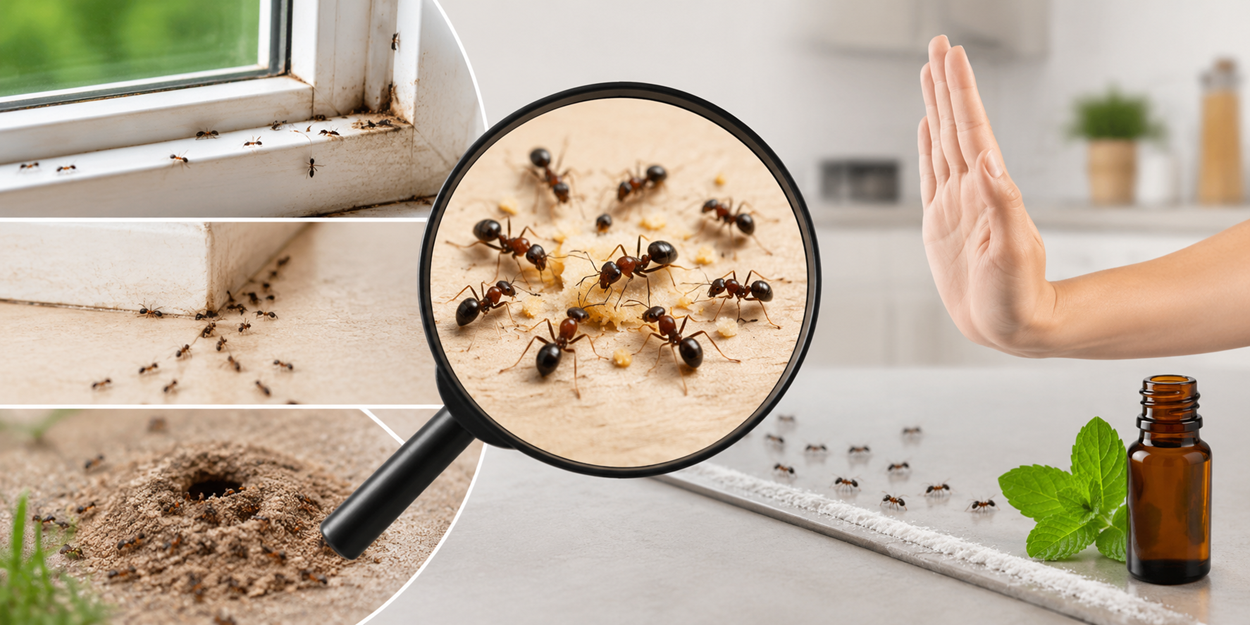
Finding a few ants in your kitchen is easy to brush off. Most people wipe them away and move on. But if they keep coming back, there is usually more going on than what you can see. Ants live in large colonies, so the handful walking across your counter is only a small part of the problem.
The good news is that most ants are not dangerous. Still, that does not mean you should ignore them.
Can Ants Make You Sick?
Most ants are not known for spreading diseases the way mosquitoes or rodents do. Even so, they are not exactly clean. They crawl through garbage, soil, and other dirty places before making their way onto your kitchen counters and into your pantry.
That is why it is never a good idea to let an ant problem grow.
Are Fire Ants Different From Normal Ants?
Fire ants are one of the biggest concerns for homeowners. They are quick to defend their nests, and their stings hurt. Most people end up with itchy, burning bumps that last for days. For someone with an allergy, a sting can become a medical emergency.
Carpenter ants create a different problem. They do not eat wood, but they dig through damp or damaged wood to build their nests. Over time, that can weaken parts of your home if the colony is left alone.
Why Do Ants Keep Coming Back?
This is where many people get frustrated. You spray the ants. They disappear. A few days later, they are back again.
That happens because sprays usually kill only the ants you can see. The queen and the rest of the colony stay hidden, so new worker ants simply replace the ones that died.
When is it Time to Call Professional Pest Control?
If you notice any of these signs, it is probably time to stop fighting the problem on your own:
- Ants showing up every day
- Long trails leading into your home
- Fire ant mounds in the yard
- DIY products that work for only a short time
Professional ant control services in Texas can identify the ant species and treat the entire colony, not just the visible workers. An experienced ant exterminator also knows where ants like to nest, which saves you from weeks of trial and error.
Bottom Line
A few ants may not seem like much, but they rarely stay that way. The sooner you deal with the problem, the easier it is to keep it from turning into a full infestation.
If the ants keep coming back despite your best efforts, Organizations like Guardian Mosquito and Pest Control can help identify the source of the problem and provide a lasting treatment, so you spend less time chasing ants and more time enjoying your home.
Frequently Asked Questions About Ants in Texas
Are ants dangerous to humans?
Most common household ants are not dangerous to humans, but some species can bite or sting. Fire ants are a particular concern because their stings can cause painful, itchy reactions and may cause serious allergic reactions in some people.
Can ants make you sick?
Ants are not generally considered major disease-spreading pests, but they can contaminate food and surfaces because they travel through soil, garbage, and other unsanitary areas. Keeping ants out of kitchens, pantries, and food-storage areas is an important part of household pest prevention.
Why do ants keep coming back after I spray them?
Ants often return because sprays may kill visible worker ants without eliminating the colony. The nest, queen, and other ants may remain hidden, allowing the colony to continue producing new workers. Effective ant control focuses on identifying and addressing the source of the infestation.
What types of ants are common in Texas homes?
Texas homes can experience several types of ants, including fire ants, carpenter ants, and other nuisance ants. The appropriate treatment depends on the species because different ants have different nesting habits, food preferences, and behaviors.
When should I call a professional ant exterminator?
You should consider professional ant control when ants appear repeatedly, form established trails inside your home, create fire ant mounds in your yard, or return after DIY treatments. A pest professional can identify the ant species, locate potential nesting areas, and recommend a treatment plan based on the infestation.